


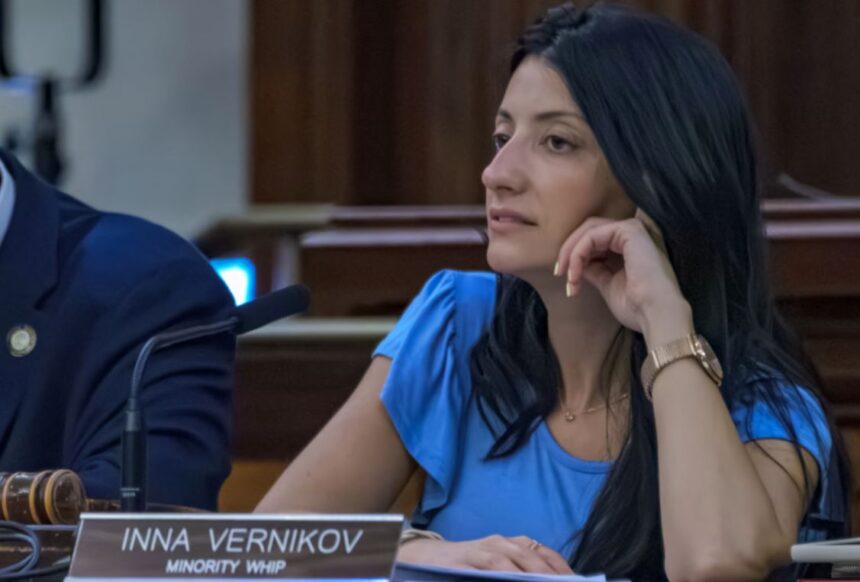
New York City politics found a new flashpoint this week after Inna Vernikov was selected to help lead a newly formed City Council task force focused on combating antisemitism.
The controversy is not about whether antisemitism should be addressed. It is about whether the councilmember’s past rhetoric makes her the right face for that work, and what this means for the already tense dynamic between City Hall and the City Council in the early months of the Zohran Mamdani administration.
What happened
According to reporting, the City Council’s Jewish Caucus elevated Vernikov into a leadership role for the council’s new task force, designed to coordinate hearings and policy work focused on antisemitism.
In the hours that followed, criticism intensified because of previous public statements she made about the mayor. Vernikov later issued an apology and acknowledged the remarks were inflammatory.
Why the backlash landed so fast
The argument from critics is straightforward: a task force meant to lower the temperature and build credibility cannot be led by someone who recently used highly charged language about a political opponent, especially in a climate where trust is already fragile.
Some progressive groups and activists have publicly called on the City Council to remove Vernikov from the leadership role.
Supporters of the appointment frame it differently. They point to urgency, visible incidents of antisemitism, and the need for political will that goes beyond statements and condemnations.
What the task force is supposed to do
The task force is being presented as a council-led vehicle to move faster on hearings, legislation, and recommendations. Some coverage has described it as a way for the council to take action even as City Hall develops its own antisemitism initiatives.
The council has said the work will include policy discussions and public-facing action, not only symbolic messaging.
The leadership dynamic at City Hall
This fight also doubles as an early test for Julie Menin, the new Council speaker, who is being pulled between competing expectations.
On one side is pressure to show firm action on antisemitism and deliver tangible policy results. On the other is pressure to ensure the council’s approach does not inflame divisions or look like it is rewarding rhetoric that many New Yorkers see as out of bounds.
Where the other co-chair fits in
Several reports identify Eric Dinowitz as the task force’s other co-chair, making it a bipartisan leadership structure on paper even as the Vernikov decision dominates headlines.
That pairing may matter if the council tries to steer the task force toward hearings and legislation that can win broader support.
What to watch next
- Whether City Council leadership changes the task force structure or keeps the leadership team in place despite the blowback.
- Whether hearings and proposed bills arrive quickly enough to shift the conversation from personalities to policy.
- Whether the task force and City Hall end up collaborating, competing, or operating on parallel tracks.
The bigger takeaway
New York City is trying to address a real and sensitive problem while also navigating a volatile political moment.
The immediate question is not only whether the task force will act, but whether it can do so in a way that builds public confidence across communities that currently do not trust each other’s motives.