


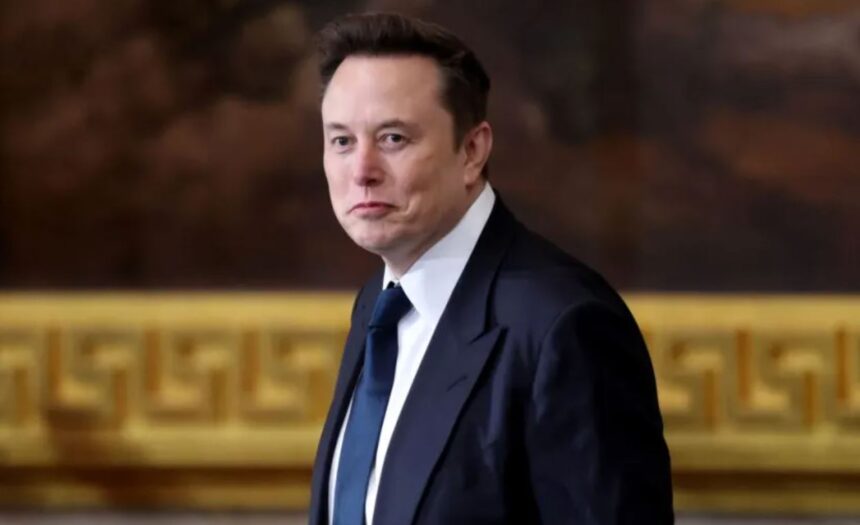
After the European Union hit his social media platform X (formerly Twitter) with a $140 million penalty under its new Digital Services Act (DSA), Musk fired back online, calling the ruling “bulls–t” and even suggesting the EU should be abolished.
Behind the social-media fireworks is a serious first test of Europe’s tough new tech rulebook – and it could shape how global platforms treat users, advertisers, and researchers everywhere, including in New York.
What Exactly Did the EU Fine X For?
On 5 December, the European Commission announced a €120 million (about $140 million) fine against X – the first non-compliance decision under the Digital Services Act.
Regulators say X broke three core rules:
1- “Deceptive” blue checkmarks
-
- Under Musk, the blue badge shifted from a verification symbol to a paid feature through X Premium.
- The Commission argues that anyone can now buy a checkmark without meaningful identity verification, while the icon still suggests trustworthiness.
- That, in their view, misleads users and exposes them to impersonation scams and other manipulation
2- A non-transparent ads library
- DSA rules require big platforms to maintain a searchable ad repository showing who paid for ads, what they’re about, and how they’re targeted.
- The EU says X’s ad library lacks key information and builds in delays and access barriers that make independent scrutiny difficult.
3- Blocking researchers from public data
- Under Article 40 DSA, very large platforms must give vetted researchers access to public data so they can study systemic risks like disinformation, political manipulation, or scam campaigns.
- According to the Commission, X both restricts scraping and imposes heavy procedural hurdles that effectively shut researchers out.
The fine is relatively modest compared with the maximum available – under the DSA, platforms can be hit with penalties of up to 6% of global annual turnover and even face suspension in extreme cases.
X now has a set deadline (roughly two months to propose fixes and around three months to implement them) or risk further sanctions.
Musk’s Fury: “A Tyrannical, Unelected Bureaucracy”
Musk reacted in typical Musk fashion – publicly and aggressively.
- He dismissed the penalty as baseless and framed it as an attack on free speech.
- In posts on X, he amplified critics of the decision and suggested the EU is a “bureaucratic” machine trying to control online discourse.
- In some commentary, he went as far as calling for the European Union to be dissolved, arguing that power should return to nation-states rather than centralized regulators in Brussels.
Critics of Musk quickly pointed out that he did not use the same free-speech language when Russia blocked access to X, raising questions about how consistently he applies his principles.
Washington Steps In: A Transatlantic Flashpoint
The fine isn’t just a Brussels-vs-Musk story anymore – it has become a Washington-vs-Brussels headache.
- President Donald Trump called the fine “a nasty one” and said he didn’t understand how Europe could justify it, warning that the EU is heading in “bad directions” and “has to be very careful.”
- Secretary of State Marco Rubio and FCC Chair Brendan Carr denounced the decision as an attack on American companies and innovation.
- Deputy Secretary of State Christopher Landau went further, arguing that EU regulations like this fine undermine Western unity by hurting US interests even as Europe relies on US security guarantees via NATO.
In short, parts of the US political establishment are framing the case less as a boring compliance issue and more as a geopolitical clash over who sets the rules for Big Tech.
Brussels’ Reply: “This Is About Transparency, Not Censorship”
EU officials insist the drama on X is missing the point.
- In its official press release, the European Commission stresses that the case is about transparency and design choices, not what people are allowed to say online.
- EU tech leaders emphasize that the DSA doesn’t force platforms to verify users – but if they sell something as “verified,” it can’t be essentially meaningless.
- Legal experts have also noted that many DSA obligations – such as clear ad disclosure and researcher access – have close analogues in US debates and even in existing American law.
The Commission’s message is blunt: obey the rules or face fines, regardless of whether the owner is Elon Musk, a US firm, or anyone else.
A Quick Explainer: What Is the Digital Services Act?
Think of the DSA as the EU’s 21st-century rulebook for big online platforms.
- It’s an EU-wide regulation that came into force in 2022.
- It applies to intermediary services – from social networks and marketplaces to search engines – with extra-heavy obligations for “Very Large Online Platforms” like X, YouTube, TikTok, and Facebook.Wikipedia+1
- Key goals include:
- More transparency around ads and recommendation algorithms
- Stronger systems against illegal content and scam campaigns
- Data access for independent researchers
- Clearer user rights around moderation decisions
For companies, that translates into compliance costs, audit requirements, and the risk of serious fines if they fall short.
Why New Yorkers – and US Users – Should Care
At first glance, this looks like a distant Brussels story about EU law. But for New Yorkers scrolling X on the subway, there are real implications.
1- Design changes tend to be global
If X rethinks its blue check system or ad transparency features to satisfy EU regulators, it may roll out the same changes worldwide rather than maintain separate versions for Europe and the rest of the world.
2- Scams and impersonation are not just a European problem
New York politics, Wall Street, and local news all play out on X in real time.
A verification badge that can be bought without identity checks doesn’t just confuse EU users – it also makes it easier for scammers or fake “official” accounts to target New Yorkers, investors, or local voters.
3- Precedent for other platforms
X is the first platform fined under the DSA, but it won’t be the last: investigations are already underway into other very large platforms, and TikTok has been pushed into legally binding commitments to improve its ad library.
If Europe keeps enforcing aggressively, it could set the bar for global standards on transparency and platform accountability – which US regulators may eventually echo.
4- Impact on New York’s tech and media ecosystem
New York-based advertisers, publishers, and startups that rely on X for reach may need to adapt to more detailed ad-disclosure rules, stricter political ad controls, and tighter data-access conditions.
For journalists and researchers in NYC, stronger DSA-style access to platform data is a potential win: it could make it easier to study how disinformation and political campaigns spread online.
What Happens Next?
The legal and political drama is just starting. Here’s what to watch:
- Remedy plan & implementation
X has a fixed window – roughly 60 days to explain how it will fix the problems and around 90 days to actually do it. If the Commission isn’t satisfied, it can escalate with additional fines or periodic penalties. - Appeals in EU courts
Musk can challenge the decision before the EU General Court, potentially turning this into a long-running legal saga that tests the limits of the DSA. - More DSA enforcement cases
Regulators have already opened multiple investigations into other major platforms. X just happens to be the first high-profile example – a “test case” that will signal how tough Europe plans to be on everyone else. - US–EU digital tensions
Expect more sharp words from Washington whenever European regulators target an American tech giant. The outcome of this clash will shape not just X’s business model, but the broader relationship between US tech power and European regulatory muscle.
The Bigger Picture
You don’t have to love the DSA or agree with Musk to see why this matters.
Europe is betting that strong, centralised digital rules – with real teeth – are the only way to rein in giant platforms and protect users from scams, opaque ads, and unchecked algorithms. Musk and many US officials counter that this approach risks strangling innovation and free expression.
For New Yorkers, the question is simple but important:
Who should decide how the apps we rely on every day are designed and governed – billionaire owners, national governments, or supranational regulators like the EU?
The $140 million fine on X doesn’t answer that question. But it ensures that the fight over it will be impossible to ignore.