

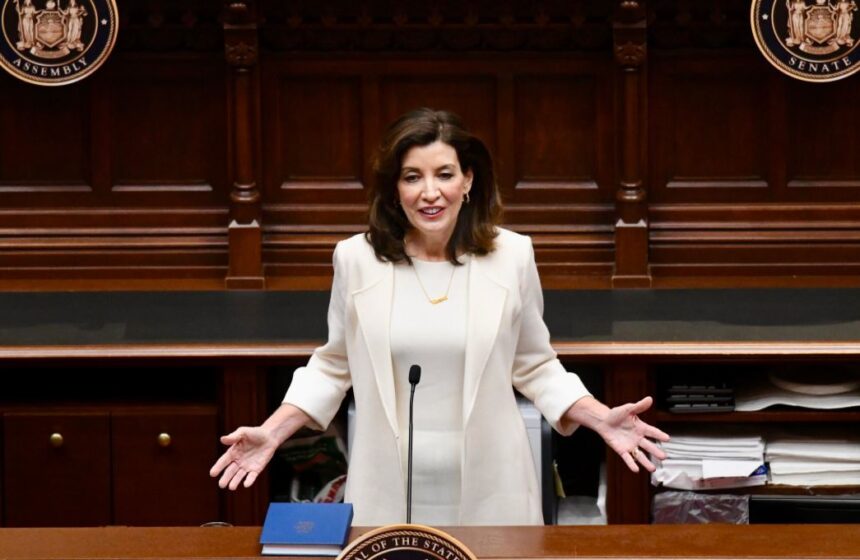
New York’s climate push was once viewed as a national model, anchored by a sweeping 2019 law that set legally binding targets to slash emissions and transition the power grid to clean electricity. But in recent months, Gov. Kathy Hochul’s administration has slowed or delayed several major climate initiatives, arguing that rising energy bills, inflation, and reliability concerns are forcing a more pragmatic approach.
Supporters of the shift say the state cannot meet ambitious goals if New Yorkers cannot afford the transition or if the grid cannot keep up. Critics counter that delaying key policies risks pushing the state further off track and raising long term costs.
The climate targets are still on the books
New York’s Climate Leadership and Community Protection Act, often called the CLCPA, set milestones that include producing 70 percent of the state’s electricity from renewable sources by 2030 and reaching 100 percent zero emissions electricity by 2040.
Advocacy groups and policy organizations also point to the law’s broader emissions targets, including deep greenhouse gas cuts by midcentury.
Those goals remain official policy. The debate is increasingly about how fast, how costly, and whether the state’s implementation timeline can survive the political and economic pressure now surrounding it.
What changed under Hochul
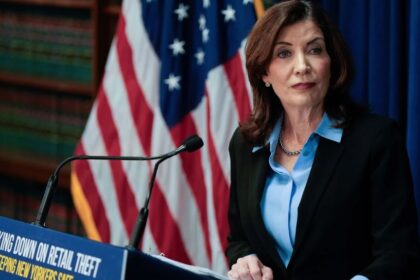
Hochul has repeatedly framed her energy and climate agenda around the cost of living, with her administration emphasizing the need to keep “rates down” while maintaining reliable service.
In practice, that approach has coincided with delays to some of the state’s most consequential climate policies:
Cap and invest delay
New York’s planned “cap and invest” program, designed to set a declining cap on emissions and generate funding for climate projects, has faced repeated timeline slippage, prompting frustration from lawmakers and environmental advocates.
Regulatory deadlines and legal pressure
A court fight is also unfolding over how quickly state regulators must implement climate mandates, with reporting indicating the state has resisted certain court ordered steps tied to emissions rulemaking.
Electrification and mandate slowdowns
Hochul has also drawn criticism for supporting or accepting delays to electrification related mandates, including policies affecting building electrification timelines and other transition requirements that opponents argue raise near term costs.
The grid warning in the background
One reason the administration’s message is landing with some voters is that the state’s grid operator has issued increasingly blunt warnings about reliability.
In October, the New York Independent System Operator said planning studies identified reliability violations in New York City and Long Island, driven by generator retirements, rising demand, and transmission constraints, unless projects and resources come online as planned.
Those concerns are not theoretical. NYISO has also issued operational alerts during extreme heat conditions, urging conservation as demand spikes.
The reliability discussion has become tightly linked to the climate conversation: electrification increases electricity demand, while delays to clean generation and transmission can tighten supply margins.
Hochul is still pushing some clean energy growth
Even as some mandates slow, the administration has highlighted actions meant to accelerate renewable procurement, particularly as federal policy shifts.
Reuters reported that Hochul directed state agencies to fast-track procurement aimed at capturing federal clean energy incentives before eligibility windows shrink under the new federal law, with a solicitation designed to pull in billions of dollars in renewable investment.
The administration and allies argue that this is what governing “in reality” looks like: focus on projects that can be built and financed, while avoiding abrupt cost shocks for households.
Critics say delays threaten leadership and increase future costs
Environmental groups and some Democratic lawmakers argue the state is backing away from its leadership role at precisely the moment it matters most.
They warn that postponing major rules and mandates does not eliminate the need to cut emissions, it simply compresses future timelines and can raise long term costs if New York misses the build windows for renewables, storage, and transmission.
With Hochul facing a re election cycle ahead, the clash is also political: affordability is a winning message, but so is New York’s identity as a climate leader.
What to watch next
Several near term developments will shape whether New York’s climate agenda rebounds or continues to stall:
- NYISO reliability assessments and whether demand and supply risks intensify for New York City and Long Island.
- The state’s cap and invest timeline and any new regulatory deadlines or court decisions.
- Renewable procurement results, especially whether projects can begin construction fast enough to benefit from remaining federal incentives.
New York is still committed on paper to one of the most aggressive climate transition plans in the country. The question now is whether the state can keep that promise while voters are demanding lower bills and the grid operator is warning about keeping the lights on.