


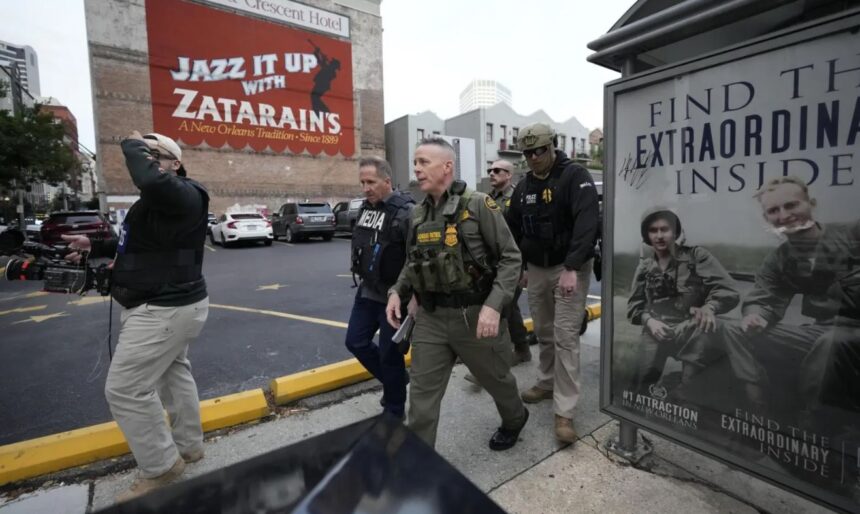
From kitchen staff to delivery trucks, a federal immigration crackdown is shaking the city’s dining scene.
New Orleans’s celebrated restaurant industry is feeling the strain as Border Patrol and immigration agents intensify operations across the city, leaving many immigrant workers frightened to show up for their shifts and forcing some businesses to scale back or temporarily close.
Over the past week, federal agents have expanded interior enforcement actions in the region as part of President Trump’s broader deportation agenda. While the operations are aimed at detaining immigrants without legal status, the ripple effects are reaching far beyond those directly targeted and straight into the kitchens and dining rooms that help define New Orleans.
Staff Staying Home, Menus Shrinking
Restaurant owners describe a sudden and visible impact:
- Cooks and dishwashers are staying home out of fear of being stopped on their way to or from work.
- Delivery drivers are skipping routes.
- Suppliers are operating with skeleton crews, leaving shelves and storage rooms understocked.
Some eateries with largely Hispanic customer bases have chosen to shut their doors temporarily, worried that a visible police or federal presence near their storefronts could put both employees and patrons at risk.
At Palm & Pine, an upscale restaurant in the French Quarter, co-owner Amarys Koenig Herndon said several employees have opted to stay home, regardless of their immigration status.
“They’re working legally, but they’re hunkered down and not even coming to pick up their paychecks,” she said, describing a climate of fear that extends far beyond undocumented workers.
The restaurant has also begun trimming its menu, not because of demand, but because of missing ingredients.
Latin Markets and Delivery Routes Under Pressure
Palm & Pine’s menu relies heavily on specialty items sourced from Latin grocery stores and markets in and around New Orleans. Now, many of those suppliers are short-staffed or struggling to keep product moving.
“With the cuisine we do, we’re very dependent on our Latin markets for a lot of ingredients,” Herndon explained. “One of the stores we go to gets a lot of product driven in from Houston, and those trucks aren’t coming in. They don’t want to risk coming into our city right now.”
The result is a quietly fraying supply chain: a driver decides to sit out a shift, a warehouse cuts staff, a market runs low on stock — and a few days later, diners find certain dishes scratched from the menu.
“It’s not just one break in the chain,” one restaurant manager said. “It’s a lot of small breaks, all at once.”
Workers Watching the Doors
In nearby Kenner and other suburbs, staff at Mexican and Central American restaurants have begun keeping a close eye on the street outside. At some locations, workers take turns checking doors and windows for signs of unmarked vehicles or uniformed agents before stepping out.
Advocates say the heightened presence of Border Patrol, which typically focuses on border regions, underscores how far immigration enforcement now reaches into the interior of the country. The agency, part of U.S. Customs and Border Protection, has expanded urban deployments in recent years, often in coordination with Immigration and Customs Enforcement.
A Hidden Backbone of the Dining Scene
For many tourists crowding into New Orleans landmarks, from beignet counters to white-tablecloth dining rooms, the disruption is largely invisible. Cafés and restaurants still fill up on weekends, and visitors often have no idea how deeply the city’s food culture depends on immigrant labor at every stage.
Behind the scenes, however, immigrant workers power much of the industry:
- Prepping ingredients in prep kitchens
- Washing dishes late into the night
- Driving trucks loaded with produce, seafood, and specialty goods
- Stocking coolers and shelves in neighborhood markets
Industry advocates warn that even a short period of aggressive enforcement can have lasting effects, pushing workers further into the shadows, destabilizing small businesses, and creating uncertainty in a sector that helped carry New Orleans through previous crises.
“There’s a Lot of Layers”
Restaurant owners say they are trying to support staff however they can, adjusting schedules, offering to mail paychecks, and sharing information from local legal and immigrant-aid groups.
Still, many admit they are improvising day by day.
“There’s a lot of layers,” Herndon said. “You feel it with your team, with your suppliers, and then with what you can actually put on a plate. It’s not theoretical. It hits every part of the restaurant.”
“Temporary Dish Fill-in shifts available at Palm&Pine starting tomorrow. We’ve got work visa holding employees afraid to come to work, and I know some people are out of work with business closures.”
As federal operations continue, New Orleans’s dining community is bracing for more disruption and quietly hoping that the workers who help sustain the city’s famous food culture can safely return to their jobs.